
The Ultimate Guide to Choosing a Belt Garage Door Opener
Why a Belt Garage Door Opener Might Be the Smartest Upgrade You Make This Year
A belt garage door opener uses a reinforced rubber belt — instead of a metal chain — to move your garage door smoothly and quietly along a rail. It is widely considered the quietest type of residential garage door opener available.
Quick answer: What is a belt drive opener?
- Uses a rubber, steel-reinforced belt to drive a trolley that opens and closes your door
- Operates much more quietly than chain drive models — ideal for attached garages
- Available in 1/2, 3/4, and 1-1/4 HPc ratings to suit different door sizes and weights
- Often includes smart features like Wi-Fi, battery backup, and app control
- Costs more upfront than chain drive, but requires less maintenance over time
If you live in a home with an attached garage — especially one where bedrooms or living spaces are nearby — that noise difference is enormous. Chain drive openers clatter and vibrate. Belt drives barely make a sound.
More than half of all residential garage door openers sold today are belt drive models. That popularity is not an accident. Homeowners are tired of being woken up at 6am by a garage door that sounds like a freight train.
This guide breaks down everything you need to know: how belt openers work, how they compare to chain drives, which features matter most, and what to look for when buying.
What is a Belt Garage Door Opener and How Does It Work?
At its core, a belt garage door opener is a motorized device that automates the opening and closing of your garage door. While it shares many structural similarities with the classic chain drive, the "secret sauce" lies in the material of the drive mechanism. Instead of a bicycle-style metal chain, it utilizes a high-tensile, reinforced rubber belt.
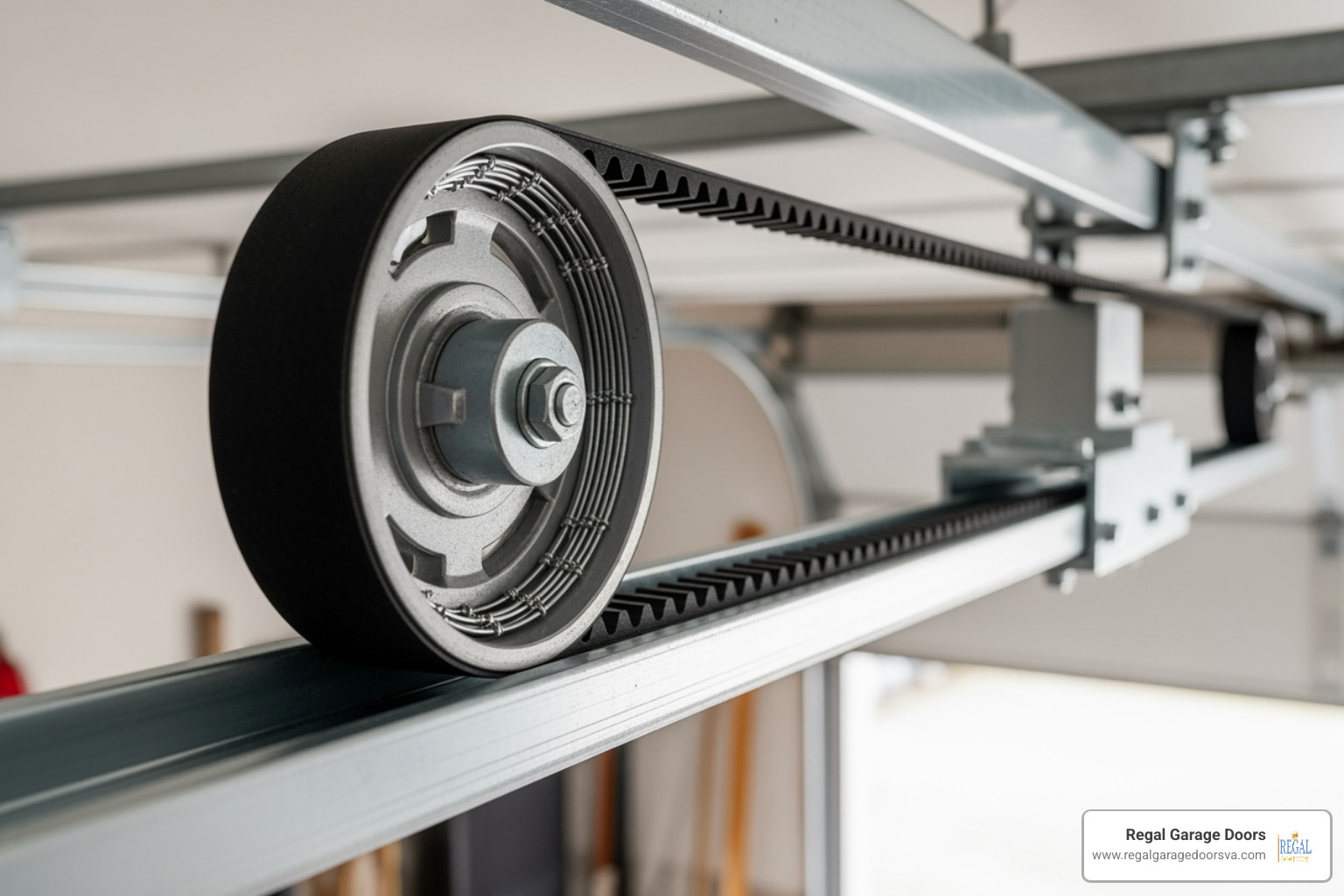
Mechanics of the belt garage door opener
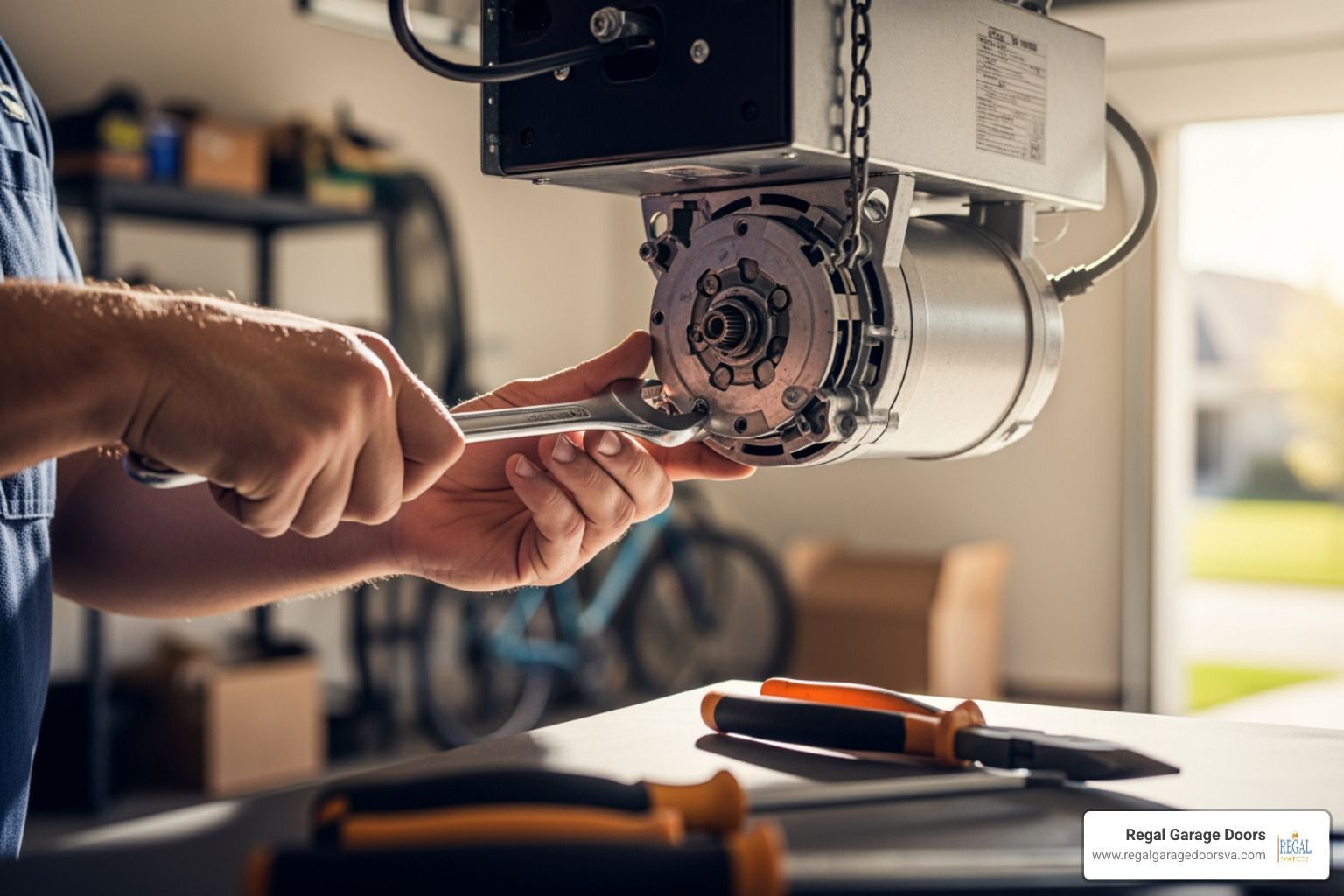
The operation is elegantly simple. Inside the motor housing, a drive gear turns the belt. This belt is looped around a pulley at the end of a long metal rail. Attached to the belt is a "trolley" or carriage. When the motor spins, the belt moves the trolley back and forth along the rail. The trolley is connected to the garage door via a metal arm; as the trolley moves toward the motor, it pulls the door up. As it moves away, it pushes the door down.
Most modern belt garage door openers utilize DC (Direct Current) motors. Unlike older AC motors, DC motors allow for "soft start and stop" technology. This means the door begins moving slowly, speeds up in the middle of the cycle, and slows down gently before reaching the floor. This significantly reduces vibration and wear on the door's tension springs and hinges. When you combine a rubber belt with a DC motor, you get a system that is virtually silent and incredibly smooth.
Horsepower Options for a belt garage door opener
Choosing the right power level is crucial for the longevity of your system. Horsepower (HP) or Horsepower comparable (HPc) ratings determine how much weight the opener can safely lift without straining the motor.
- 1/2 HPc: This is the standard for most single-car garage doors or lightweight aluminum double doors. It provides enough "oomph" for daily residential use on sectional doors.
- 3/4 HPc: This is the "sweet spot" for most homeowners. It offers extra lifting power for heavier carriage-house style doors or insulated doors common in the Shenandoah Valley. Many top-rated models from brands like Chamberlain and Genie fall into this category.
- 1 to 1-1/4 HPc: These are the heavy hitters. If you have a solid wood door, a triple-layer insulated door, or an oversized one-piece door, you need this level of power. These models often come with reinforced T-rails to handle the extra torque.
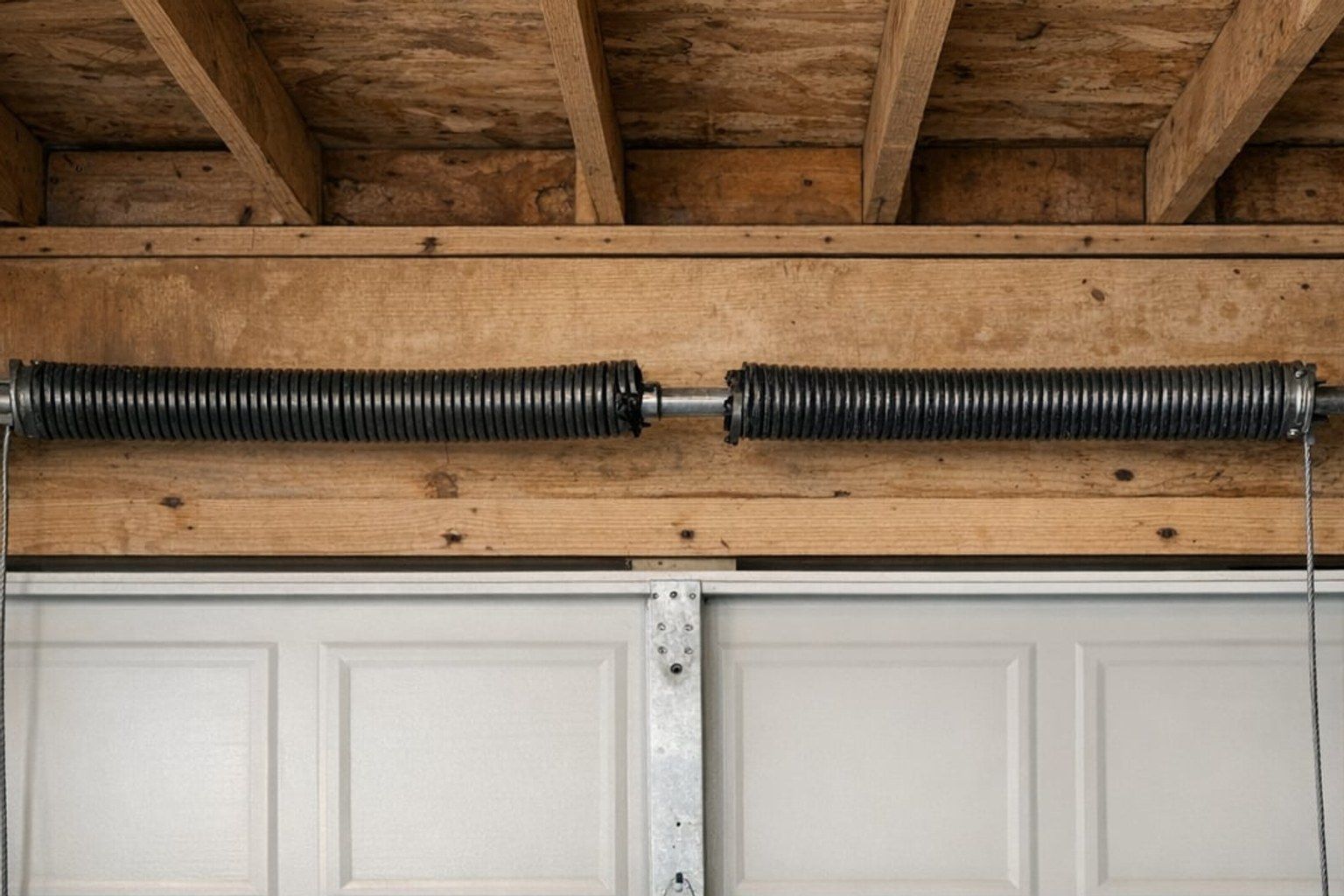
Regardless of the HP, it is vital to remember that the opener is not doing all the heavy lifting—your springs are. A properly balanced door should stay in place when lifted halfway by hand. If it doesn't, even the strongest belt garage door opener will struggle.
Belt vs. Chain Drive: A Detailed Comparison
When homeowners in Harrisonburg or Staunton call us to discuss a new installation, the first question is almost always: "Belt or Chain?" While both get the job done, they offer very different experiences.
| Feature | Belt Drive Opener | Chain Drive Opener |
|---|---|---|
| Noise Level | Ultra-Quiet (Best for attached garages) | Loud (Metal-on-metal clatter) |
| Maintenance | Low (No lubrication needed for belt) | Moderate (Requires chain lubrication) |
| Durability | High (Fewer moving metal parts) | High (Very dependable/rugged) |
| Initial Cost | Higher ($250 - $500+) | Lower ($150 - $300) |
| Smart Features | Standard on most models | Optional/Varies |
Why Silence Matters for Attached Garages
If your garage is located directly beneath a bedroom or shares a wall with your living room, a chain drive can be a daily nuisance. The metal-on-metal friction creates a grinding noise that resonates through the framing of your house. A belt garage door opener eliminates this vibration. This is why we almost exclusively recommend belt drives for modern residential builds in areas like Waynesboro and Crozet.
Maintenance and Durability Differences
Chain drives are prone to rust if the garage is humid, and they require semi-annual lubrication to stay functional. In contrast, the rubber belts used in modern openers are steel-reinforced and designed to last for decades without stretching or snapping. They don't require grease, which means your garage stays cleaner. If you ever do need a repair, How Garage Door Opener Repairs Are Handled in Staunton, VA often involves much simpler belt tensioning compared to the complex link adjustments of a chain.
Key Features to Look for in a Modern belt garage door opener
The days of a simple "up and down" button are over. Today’s openers are sophisticated pieces of smart home technology.
- Battery Backup: This is a lifesaver during the frequent summer storms in the Shenandoah Valley. A built-in battery ensures your door functions even when the power is out, providing up to 24 hours of normal operation.
- LED Lighting: Many new units, such as the Genie Signature Series or Chamberlain Secure View, feature integrated LED light arrays that flood your entire garage with bright, energy-efficient light.
- Rolling Code Technology: Systems like Security+ 2.0 or CodeDodger use billions of possible combinations. Every time you click your remote, the code changes, preventing "code grabbing" by tech-savvy thieves. For a general overview of how rolling codes work, see Rolling code.
- Motion Sensors: These automatically turn on the garage lights when you walk into the room-no more fumbling for a light switch in the dark.
For a full look at how these features integrate into your home, check out our Residential Services page.
Safety Sensors and the Protector System
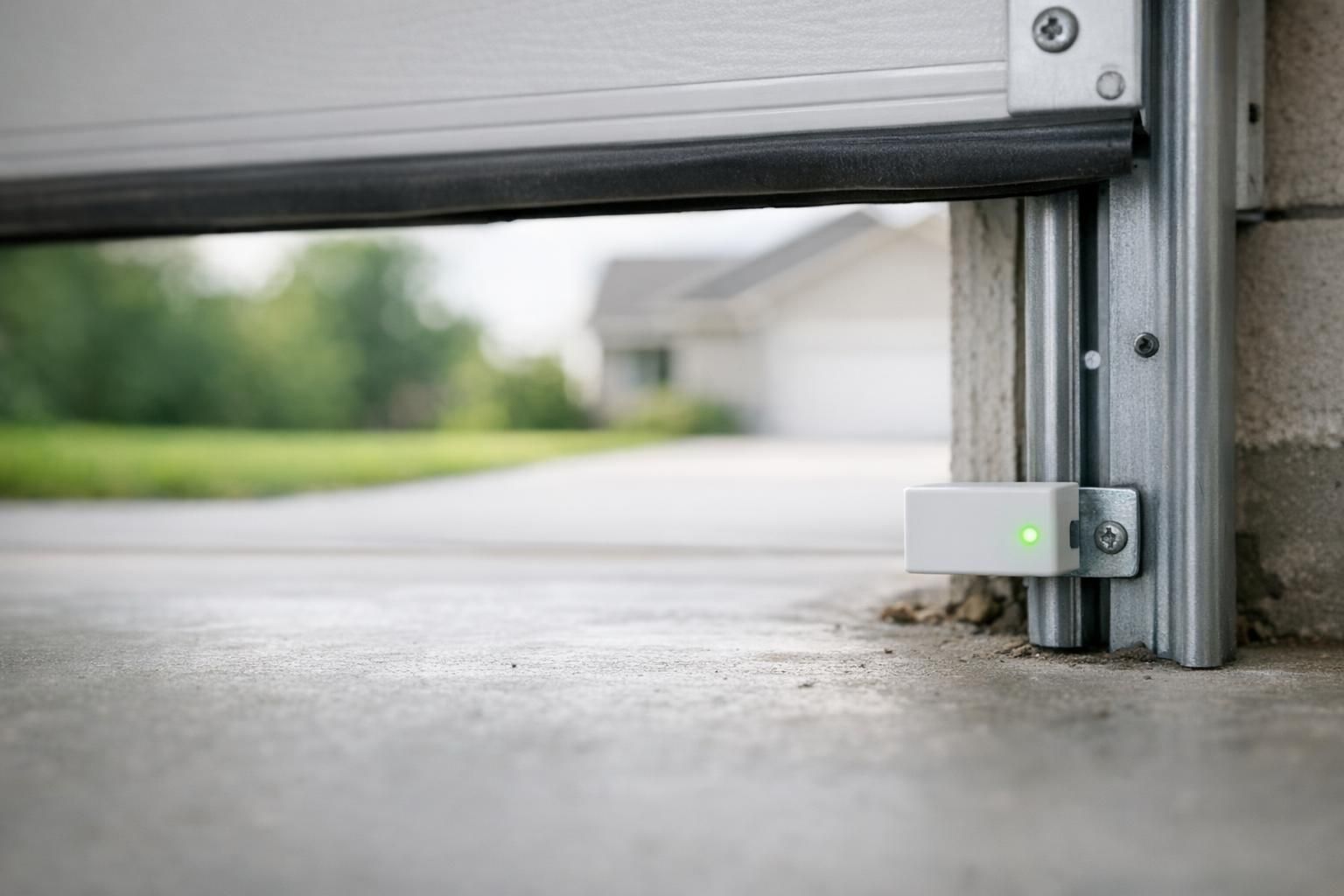
Safety is non-negotiable. Every belt garage door opener we install comes with infrared safety sensors (often called the Protector System). These sensors are mounted no higher than 6 inches above the garage floor. They project an invisible beam across the opening; if anything-a child, a pet, or a trash can-breaks that beam while the door is closing, the door will immediately stop and reverse.
Smart Connectivity and App Control
Most modern belt drives come with built-in Wi-Fi. Using apps like myQ or Aladdin Connect, you can:
- Check if you left the door open from your office in Charlottesville.
- Receive real-time alerts whenever the door is operated.
- Set a "Schedule to Close" so the door automatically locks up at 10 PM.
- Grant temporary access to delivery drivers or neighbors.
Installation and Maintenance of Your Belt Drive System
While many belt garage door opener models are marketed as DIY-friendly, the process involves electrical wiring, heavy lifting, and precise mechanical adjustments.
The Installation Process
A typical installation involves assembling the rail sections, mounting the header bracket above the door, and securing the motor unit to the ceiling. One of the most critical steps for a belt drive is setting the "belt tension." Most manufacturers, like LiftMaster, require the belt to be tightened until the tension spring is compressed to a specific measurement (often a 1/4 turn after the nut is finger-tight). If the belt is too loose, it will slip; if it's too tight, it will put unnecessary strain on the motor.
For homeowners who prefer a professional touch, our Garage Door Installation in Waynesboro, VA service ensures that your rail is perfectly level and your travel limits are programmed correctly the first time.
Annual Maintenance Checklist
To keep your belt garage door opener running for its full 10-15 year lifespan, we recommend a simple annual check:
- Monthly Safety Test: Place a 2x4 board flat on the ground under the door. The door must reverse when it strikes the wood.
- Visual Inspection: Check the belt for any signs of fraying (though this is rare).
- Lubrication: While the belt itself needs no grease, you should still lubricate the door's rollers, hinges, and springs once a year. Do not grease the tracks, as this attracts dirt and causes binding.
- Sensor Alignment: Ensure the "sending" (amber) and "receiving" (green) lights on your safety sensors are glowing steadily.
Troubleshooting Common Belt Issues
If your door starts to close and then immediately reverses, the most common culprit is a misaligned safety sensor or a cobweb blocking the lens. If the motor runs but the door doesn't move, check the emergency release cord (the red rope). It may have been pulled, disengaging the trolley from the belt. Simply pull the rope toward the motor to re-engage the system.
Frequently Asked Questions about Belt Drive Openers
Are belt drive openers suitable for heavy wooden doors?
Yes, provided you choose a high-horsepower model. A 1-1/4 HPc belt garage door opener has more than enough torque to lift heavy custom wood doors. These high-end models usually feature reinforced rails designed to prevent flexing under heavy loads.
How long does a garage door opener belt last?
Most high-quality belts are warrantied for 10 years, and many last much longer. Unlike metal chains that can stretch or rust, the steel-reinforced rubber is incredibly resilient. If a belt does fail, garage door opener belt replacement is a straightforward process that doesn't require replacing the entire motor.
Can I automate my belt drive with Alexa or Google Home?
Absolutely. If your opener has built-in Wi-Fi (like the Chamberlain B-Series or Genie StealthDrive), it can usually be linked to your smart home hub. This allows you to say, "Alexa, close the garage door," or check the door status via voice command while you're in the kitchen. For businesses looking for similar automation, we also offer Commercial Services for larger overhead systems.
Conclusion
Choosing a belt garage door opener is an investment in your home’s peace and quiet. Whether you are replacing an aging, clattering chain drive or installing a system in a brand-new home in Fishersville or Verona, the benefits of noise reduction and smart connectivity are hard to beat.
At Regal Garage Doors, we pride ourselves on providing the local expertise needed to help you choose the right model for your specific door weight and lifestyle. From code-compliant installations to transparent quotes, we are here to ensure your garage door is the most reliable part of your home.
Curious about the investment? You can learn more about How Much Does Garage Door Installation Cost in Staunton, VA or Contact Regal Garage Doors today for a personalized consultation. Let us help you find the "silent partner" your garage deserves.