
The Staunton Homeowner Guide to Opener Clutch Adjustments
When Your Garage Door Opener Starts Slipping: What Staunton Homeowners Need to Know
Garage door clutch adjustment Staunton is one of those fixes that's easy to overlook — until your door stops halfway, grinds, or refuses to budge on a cold winter morning.
Here's a quick answer to what you need to know:
| Question | Quick Answer |
|---|---|
| What does the clutch do? | It protects your opener motor by controlling how much force is applied when lifting or lowering the door |
| Signs you need adjustment | Door slips, stalls, makes grinding sounds, or reverses unexpectedly |
| DIY or professional? | Professional — incorrect adjustment can damage the motor or create safety hazards |
| How often? | Every 7-10 years, or sooner if you notice performance changes |
| Who to call in Staunton? | A local garage door technician familiar with Shenandoah Valley climate conditions |
Most homeowners don't think about the clutch until something goes wrong. But by then, the problem has often gotten worse — and more expensive.
The clutch is a small but critical part of your opener. When it's off, even slightly, the whole system feels it. Your door might hesitate. Your motor might hum longer than it should. Or you might hear a sound that's hard to describe but clearly wrong.
In Staunton and the surrounding Shenandoah Valley, seasonal temperature swings and humidity add extra stress to opener components — making clutch wear happen faster than it might in milder climates.
This guide walks you through how the clutch works, what warning signs to watch for, and what a proper professional adjustment actually involves.
I'm Peter Santana, and through my work leading Regal Garage Doors — backed by decades of building materials experience at Stoneburner Inc. — I've seen how garage door clutch adjustment Staunton homeowners put off can turn a simple tune-up into a full opener replacement. In the sections below, I'll break down everything you need to make a smart, informed decision about your opener.
Understanding the Opener Clutch Mechanism
If you’ve ever driven a manual transmission car, you know the clutch is the mediator between the engine's power and the wheels. In a garage door opener, the clutch serves a very similar purpose. It is the mechanical link between the electric motor and the drive system (whether that’s a chain, belt, or screw).
The primary function of the clutch is motor protection. It typically consists of friction plates held together by spring tension. When the motor turns, these plates grip each other to move the door. However, if the door hits an obstruction or becomes too heavy to lift safely, the clutch is designed to "slip." This slippage prevents the motor from burning itself out or snapping the drive chain.
At Regal Garage Doors, we emphasize using highest quality replacement parts because the friction material in a clutch needs to be durable enough to handle thousands of cycles while remaining sensitive enough to slip when safety demands it.
Modern openers often use electronic force settings to supplement the mechanical clutch, but the physical clutch remains a vital fail-safe. It ensures smooth power transmission and works in tandem with the safety reversal system to keep your family and vehicle safe. When the clutch is properly calibrated, your door moves with a steady, confident rhythm. When it isn't, you’re essentially asking your motor to do a job it wasn't built to handle alone.
Signs You Need a Garage Door Clutch Adjustment Staunton
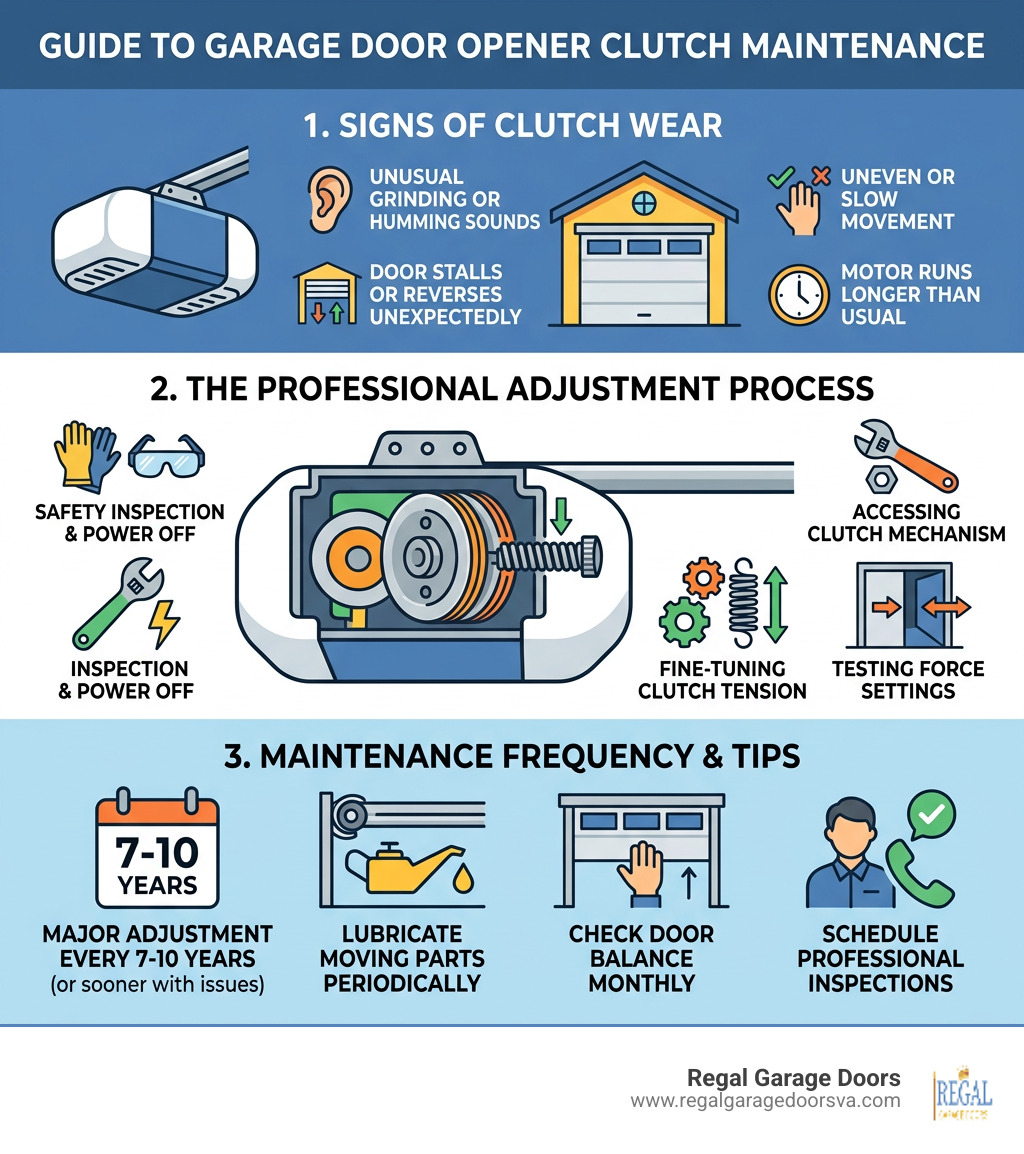
Living in the Shenandoah Valley means our garage doors deal with everything from humid summer afternoons to freezing winter nights. These conditions can cause the metal in your door to expand or contract, which changes the amount of force required to move it. If your opener isn't adjusted to compensate, you'll start seeing red flags.
How do you know if the clutch is the culprit? Here are the most common signs:
- Slipping Sounds: If you hear the motor spinning at a high RPM but the door is barely moving or moving in fits and starts, the clutch plates are likely slipping past each other.
- The "Hum of Hesitation": You press the button, the motor hums loudly, but the door stays put for a second or two before finally jerking upward.
- Unexpected Reversals: If your door starts to close and then suddenly reverses for no apparent reason (and the safety eyes are clear), the clutch might be sensing too much resistance and "thinking" it hit an object.
- Erratic Movement: A door that moves smoothly at the bottom but struggles or "stutters" as it reaches the top of the tracks often needs a torque recalibration.
There are 6 obvious signs your garage door needs repair in Staunton VA that every homeowner should memorize, and clutch slippage is frequently at the root of noisy or slow operations. If your door feels "heavy" even when disconnected from the opener, the clutch is working overtime to compensate for a balance issue.
The Risks of Ignoring Garage Door Clutch Adjustment Staunton
It's tempting to ignore a little bit of noise or a slight delay, but a slipping clutch is a ticking time bomb for your opener. When the clutch slips excessively, it generates heat. This heat can glaze the friction plates, making them even more prone to slipping, or worse, it can transfer to the motor.
Ignoring the problem often leads to:
- Motor Burnout: The motor works twice as hard to move the door, eventually leading to a total electrical failure.
- Gear Stripping: Many openers use internal drive gears that can wear down or strip when the system is out of calibration, especially if the clutch and force limits are not set correctly.
- Structural Strain: A clutch that is set too "tight" won't slip when the door encounters resistance, which can bend the door panels or pull the opener mounting bracket right out of the ceiling.
Understanding how garage door opener repairs are handled in Staunton VA helps homeowners realize that a simple adjustment today prevents a costly replacement tomorrow.
Climate and Maintenance Frequency in the Shenandoah Valley
Staunton's climate is beautiful, but it's tough on mechanical systems. We see significant temperature swings that affect the viscosity of lubricants and the tension of the springs that assist the opener.
While a garage door can last 15-30 years, the components that assist the clutch, like the springs, typically only last 7-10 years. As springs weaken, the door becomes "heavy," forcing the clutch to work harder. We recommend a professional inspection every year, but a full clutch recalibration is usually necessary every 7-10 years to stay in sync with the natural wear of the door's counterbalance system.
| Weather Condition | Impact on Clutch/Opener | Maintenance Need |
|---|---|---|
| High Humidity | Causes wooden doors to swell; increases weight | Check force settings; lubricate tracks |
| Freezing Temps | Thickens grease; metal contracts | Adjust clutch tension for cold-start power |
| Rapid Fluctuations | Leads to condensation and rust on plates | Annual "tune-up" to ensure smooth friction |
The Professional Process for Maintenance
When we arrive at a home in Staunton or Fishersville for a garage door clutch adjustment Staunton service, we don't just turn a screw and leave. It's a comprehensive diagnostic process. We service all major brands, including Genie, Linear, and Craftsman.
A professional technician starts by inspecting the internal gears. If we see "snow" (tiny plastic shavings) inside the housing, we know the gears are already being damaged by a faulty clutch. We then use specialized tools to calibrate the torque. This isn't just about making the door move; it's about ensuring it moves with the exact amount of force specified by the manufacturer for safety and longevity.
Step-by-Step Garage Door Clutch Adjustment Staunton
For those curious about what happens during our residential services visit, here is the professional workflow:
- Power Disconnection: Safety first. We disconnect the power to prevent accidental activation.
- Housing Removal: We remove the opener cover to access the internal adjustment nut and friction plates.
- Spring Tension Inspection: Before touching the clutch, we check the door's balance. If the door isn't balanced, no amount of clutch adjustment will fix the problem.
- The Adjustment: Using a nut driver or specialized wrench, we adjust the tension on the clutch spring. A quarter-turn can make a massive difference.
- Force Limit Calibration: We adjust the "Open" and "Close" force settings on the logic board to match the new mechanical tension.
- Obstruction Test: We place a 2x4 board on the garage floor. The door must reverse immediately upon hitting the board. If it doesn't, the clutch is too tight and needs to be backed off.
Why Professional Service Outperforms DIY
We often get asked, "Can't I just tighten that nut myself?" While it looks simple, the risks are significant. Garage door openers are high-tension, high-voltage machines.
One of the biggest risks of DIY adjustment is over-tightening. If you tighten the clutch too much, you effectively disable the safety reversal system. If a child or a pet were under the door, the opener wouldn't stop—it would keep pushing with the full force of the motor. This is why garage door opener safety is governed by the UL 325 standard, which sets strict requirements for automatic reversal mechanisms and entrapment protection.
Furthermore, professional service ensures you stay within code-compliant installs and keeps your manufacturer warranty intact. Many homeowners are surprised to learn how much garage door installation cost in Staunton VA can be when they have to replace an entire unit because a DIY "fix" fried the logic board. We provide the specialized tools and the "trained ear" needed to diagnose if the problem is truly the clutch or if it's actually a frayed cable or a broken spring.
Frequently Asked Questions about Clutch Maintenance
Can clutch issues be prevented through regular maintenance?
Absolutely. Most clutch problems start because the door has become harder to move. By scheduling an annual inspection, we can lubricate the rollers and hinges and check the spring tension. If the door remains easy to lift manually, the clutch rarely needs adjustment. Using a silicone-based lubricant on the moving parts of the door (but never the clutch plates themselves!) goes a long way.
What should I do if my garage door clutch slips during operation?
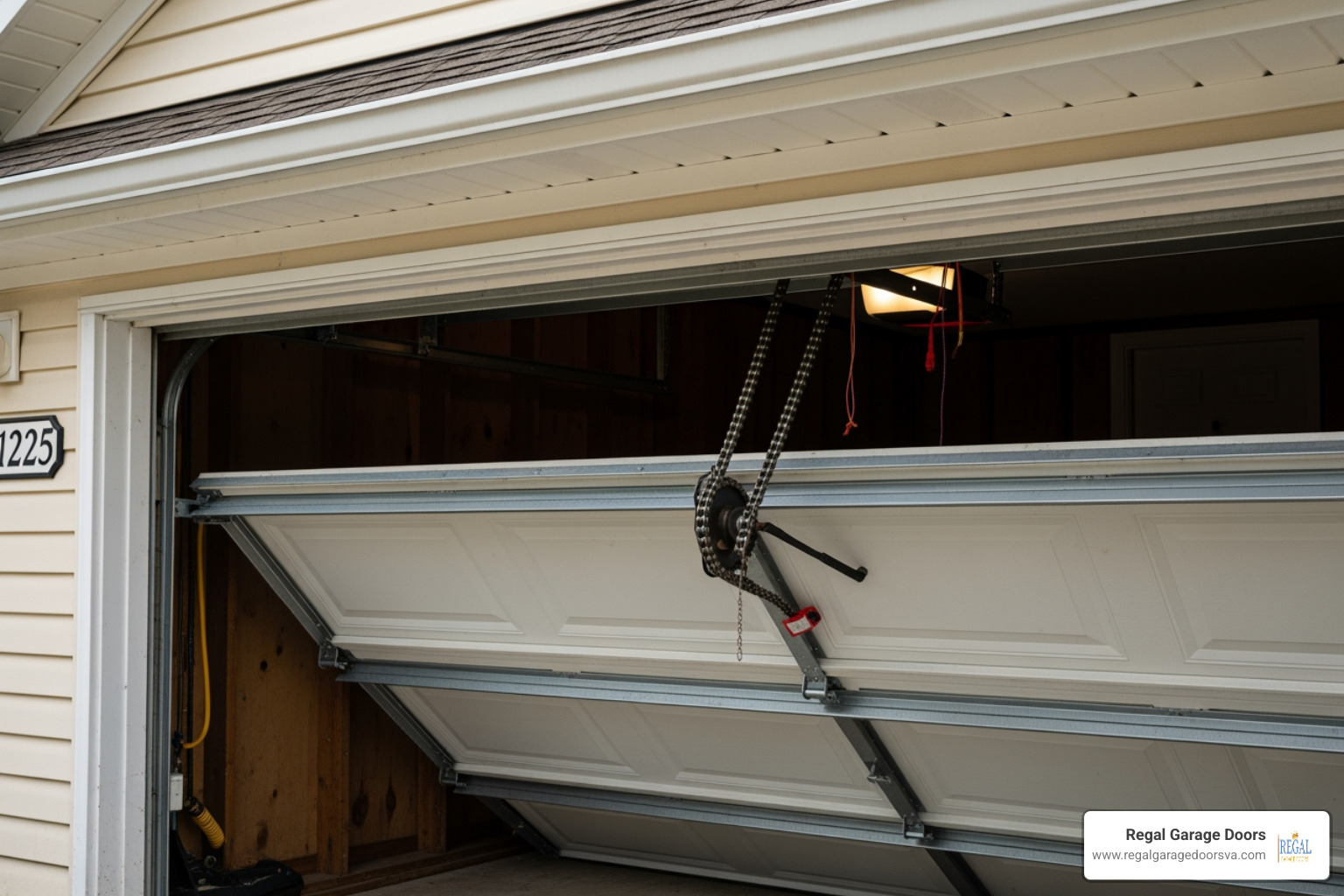
If you hear that tell-tale grinding or spinning sound, stop operating the door immediately. Do not try to "help" the door up by pulling on it while the motor is running, as this can cause the gears to strip instantly. Pull the red emergency release cord to operate the door manually, and contact us for a professional assessment.
Which garage door opener brands require the most adjustments?
Older chain-drive models from brands like Wayne Dalton or Amarr often require more frequent mechanical adjustments because chains stretch over time. Heavy-duty openers used for solid wood carriage house doors also need more frequent check-ups due to the sheer weight they move daily. Modern belt-drive units are generally more stable but still require electronic force calibration as they age.
Conclusion
Your garage door is the largest moving object in your home, and the opener clutch is the "brain" that ensures that movement is safe and efficient. For homeowners in Staunton VA, keeping this component in top shape isn't just about convenience—it's about protecting your investment and your family.
At Regal Garage Doors, we pride ourselves on local expertise and transparent service. Whether you have a Raised Panel, Recessed Panel, Flush Panel, or a custom Carriage House door, we have the tools to ensure your opener is perfectly calibrated for the unique Virginia seasons.
Don't wait for your motor to burn out. If you've noticed your door hesitating or making strange noises, give us a call. We’ll provide a transparent quote and get your door back to its whisper-quiet, reliable self.