
Garage Door Safety 101: Photo-Eyes, Auto-Reverse, and Family Safety
Your garage door is probably the largest moving object in your home, a door that opens and closes several times a day, usually without a second thought. What makes that safe is a pair of safety systems working quietly in the background: the photo-eye sensors near the floor and the auto-reverse function built into the opener. When both are working, a closing door stops and goes back up the moment something is in its way. When one of them is not, the door keeps coming down.
The short answer for homeowners in Harrisonburg, Staunton, Waynesboro and the rest of Augusta County is this: test both safety systems once a month, it takes about two minutes, and call a professional if either test fails. This guide walks through what each feature does, how to test it safely, what a failed test usually means, and which jobs belong to a technician. Regal Garage Doors serves the Valley from Harrisonburg to Charlottesville, and the questions below cover keeping your family safe around the garage.
Garage Door Safety at a Glance
If you only read one part of this guide, read this table. It covers the safety features on a typical automatic garage door, how to check each one, and the point at which a homeowner should stop and call for help.
| Safety feature | What it does | How to check it | How often | Call a pro when |
|---|---|---|---|---|
| Photo-eye sensors | An invisible beam across the opening near the floor. If something breaks the beam, a closing door reverses. | Start closing the door, then pass a broom handle or a box through the beam. | Monthly | The door keeps closing, or the sensor lights will not stay steady after cleaning and realigning. |
| Auto-reverse (contact reversal) | If the closing door meets resistance, the opener reverses it. | Lay a piece of lumber or a roll of paper towels flat on the floor under the door and close it. | Monthly | The door presses down on the object instead of reversing. |
| Door balance | Springs carry the weight of the door so the opener and your hands do not have to. | Pull the release, lift the door by hand to about halfway and let go. | Every few months | The door slams down, shoots up, or feels very heavy. |
| Manual release | Lets you disconnect the door from the opener during a power outage or emergency. | Confirm the cord is present, reachable, and not tangled. | Seasonally | The release will not engage or disengage. |
How Photo-Eye Sensors Protect Your Family
Look at the bottom of the tracks on either side of your garage door opening and you will usually find two small sensors, one on each side, pointed at each other. One sends a beam of light and the other receives it. As long as the receiving sensor sees the beam, the opener knows the opening is clear.
When a child, a pet, a bicycle or a trash can breaks that beam while the door is closing, the opener is designed to stop and reverse. That is the first line of defense, and it works before the door ever touches anything.
Photo-eyes are simple, but they are also exposed. They sit at floor level in a garage, which means they get bumped, dusted, splashed and knocked out of line. The most common photo-eye problems are not electronic failures at all:
- Misalignment. A sensor bracket gets nudged by a car bumper, a lawn mower or a storage bin and the two eyes no longer point at each other.
- Dirty lenses. Dust, cobwebs and road grime build up on the lens and weaken the beam.
- Direct sunlight. On some west-facing garages, low afternoon sun shining straight into the receiving eye can confuse it.
- Loose or damaged wiring. The thin low-voltage wire running up the wall can be stapled through, chewed or pulled loose.
The tell-tale symptom of a sensor problem is a door that starts to close, then goes right back up, or a door that will only close if you hold the wall button down the whole way. That workaround means the photo-eye protection is not working, so get the sensors sorted.
How Auto-Reverse Works, and Why It Is a Separate Test
Photo-eyes watch the opening. Auto-reverse watches the door itself. If the door is closing and meets resistance it did not expect, the opener is designed to sense it and send the door back up. This covers anything the beam cannot see, such as an object above the beam height.
Auto-reverse depends on the opener being set correctly. Openers have force and travel settings that tell them how hard to push and where the door should stop. Over the years those settings sometimes get turned up to cover a different problem. A door that started sticking in cold weather, or one that is out of balance because a spring is weakening, may struggle to close, and someone raises the force so it will finish.
That is why auto-reverse needs its own test, separate from the photo-eyes:
- A door with clean, aligned photo-eyes can still have force settings set too high.
- A door that passes the photo-eye test can still press down hard on an object instead of reversing.
- A failed auto-reverse test is not a homeowner adjustment. It usually points to a door balance or opener problem that needs to be diagnosed, not just turned down.
The Simple Monthly Garage Door Safety Test
You do not need tools or experience for this. Pick a time when the driveway is clear, keep children and pets inside, and work through the steps in order. If anything fails, stop there and do not keep using the door to close over people, pets or vehicles until it is fixed.
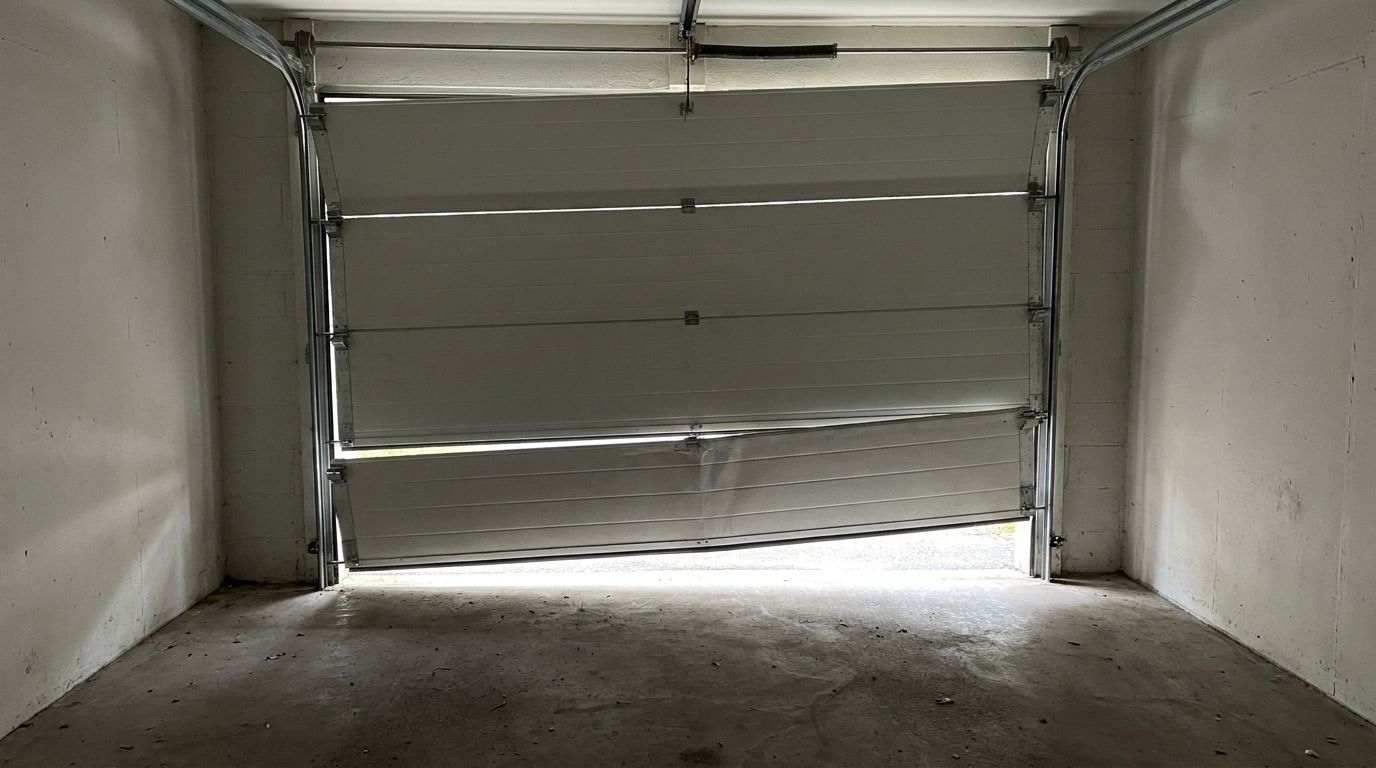
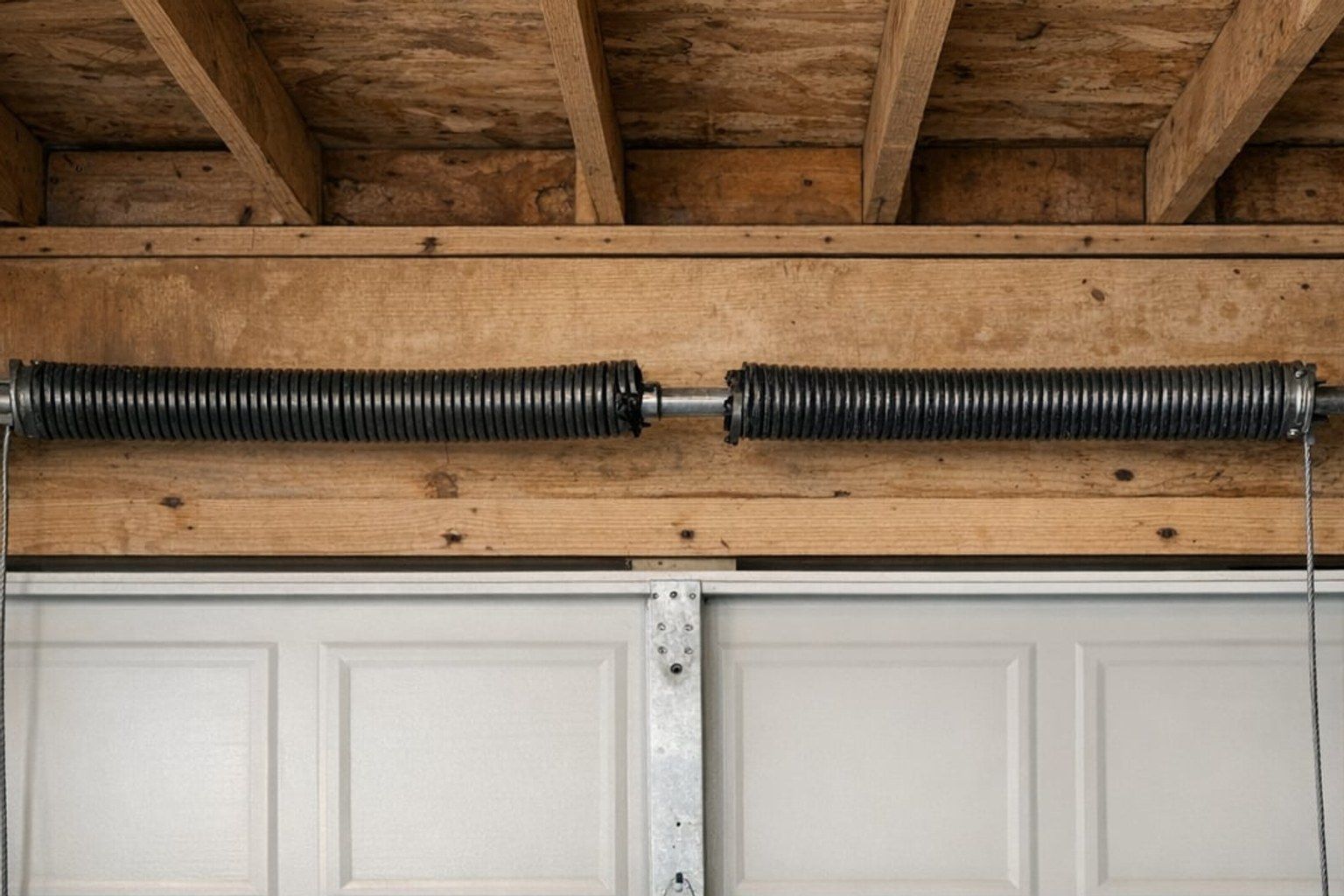
- Look first. Stand inside the garage and look at the springs, cables, rollers and tracks. A spring with a visible gap, a frayed cable, or a bent track section is a reason to stop and call. Do not run the door to see what happens.
- Check the photo-eyes. Make sure both indicator lights are on and steady. Wipe each lens gently with a soft dry cloth.
- Test the beam. Press the wall button to close the door. While it is moving down, pass a broom handle or a cardboard box through the beam near the floor. The door should stop and go back up.
- Test auto-reverse. Lay a piece of lumber flat on the floor in the center of the opening, or use a roll of paper towels. Close the door. When it touches the object, it should reverse. If it presses down and stays there, the test has failed.
- Check the balance. With the door closed, pull the manual release cord to disconnect it from the opener. Lift the door by hand to about halfway and let go carefully. A balanced door stays roughly where you leave it. Reconnect the opener when you are done.
Whether your home is in Harrisonburg, Crozet or Charlottesville, this routine tells you more about the condition of the door than anything else you can do without tools.
Everyday Habits That Keep Families Safe Around the Garage
The safety systems on a door are a backstop. A handful of household habits that cost nothing do most of the work.
- Keep remotes away from kids. A remote is not a toy. Store it in the car or somewhere children cannot reach, and explain why the door is off limits.
- Mount the wall button high. Place the wall control out of reach of small children and in a spot where whoever presses it can see the whole door.
- Watch the door until it closes. Do not press the button and walk away or drive off without seeing the door reach the floor.
- Never run under a moving door. Teach children that racing the door is dangerous, even if the sensors are working.
- Keep fingers out of the sections. The joints between panels pinch as the door bends over the curve of the track. Lift from handles or the bottom rail only.
- Leave springs and cables alone. The springs carry the full weight of the door under high tension. Adjusting, loosening or removing them is technician work.
- Use the manual release with the door closed. Pulling the release while the door is open can let an unbalanced door drop.
What a Failed Safety Test Costs You If You Ignore It
A garage door that fails a safety test usually still works. It opens, it closes, and it gets the car in and out. A door that will not reverse is not loud or inconvenient. It simply stops protecting the people and things underneath it.
The first cost is the obvious one: a closing door that will not reverse can injure a child or a pet, or crush whatever is in its path, from a bicycle to the hood of a car. The second cost is mechanical. A door that fails auto-reverse often has a balance or spring problem underneath, and an opener forced to push an unbalanced door wears out faster, so a smaller repair can turn into an opener or spring replacement.
If a test fails, the fix is often modest, such as realigning the sensors, repairing a wire, or rebalancing the door. Regal offers same-day service, and financing is available if the problem turns out to be a larger repair or a replacement you were not planning on this year.
Why Shenandoah Valley Homeowners Call Regal Garage Doors
The safety systems on a garage door only protect your family if they are set up and maintained correctly, and the parts that affect them most, the springs, the opener settings and the door balance, are the parts homeowners should not adjust themselves. When a safety test fails, here is what you can count on when you call Regal:
- A licensed contractor. Regal Garage Doors is a division of Stoneburner Inc and holds Virginia Class A contractor license #2701037133.
- Same-day service. A door that will not reverse or will not close safely is not something to live with for a week.
- Doors, openers and awnings. We work with Clopay garage doors and LiftMaster openers, and we also offer SunSetter awnings. Each is its own product line.
- Financing available. If a safety problem leads to a new opener or a new door, financing options are available.
- A wide Valley service area. We serve Harrisonburg, Waynesboro, Staunton, Augusta County, Crozet and Charlottesville.
If you are comparing options or considering an upgrade, you can see the full range of work on our residential garage door services page. And if your door is not just unsafe but not opening at all, our guide to why a garage door won't open walks through the most common causes.
Schedule a Garage Door Safety Check in the Shenandoah Valley
If your door failed the photo-eye test, pressed down instead of reversing, or slammed shut when you checked the balance, it is time for a technician to take a look.
Call Regal Garage Doors at 540-208-1007. Tell us which test failed and what the door did. Regal offers same-day service, works with Clopay doors and LiftMaster openers, holds Virginia Class A contractor license #2701037133, and has financing available if a failed test leads to a new door or opener. If it is not urgent, you can also request a visit through our contact page.
Frequently Asked Questions
How do I test my garage door's auto-reverse feature?
Lay a piece of lumber flat on the floor in the middle of the door opening, or use a roll of paper towels, then close the door with the wall button. When the door touches the object it should stop and go back up. If it presses down and stays there, stop using it to close over anything and call a technician.
Why does my garage door go back up when I try to close it?
A door that starts down and then reverses on its own usually has a photo-eye problem. Check for anything sitting in the beam, wipe both lenses, and make sure both indicator lights are steady. If the sensors look fine and the door still reverses, the wiring, alignment or opener settings need a professional look.
Can I clean and realign garage door photo-eye sensors myself?
Yes. Wiping the lenses with a soft dry cloth and gently turning a bumped sensor back toward its partner are safe homeowner tasks. Watch the indicator lights as you adjust. If the lights will not stay steady after cleaning and realigning, or the wiring looks damaged, it is time to call for service.
Is it safe to use a garage door with a broken spring?
No. The springs carry the weight of the door. With a broken spring the opener is trying to lift a door it was not built to lift, and a door that is opened by hand can drop suddenly. Leave the door closed if you can and call a garage door professional rather than running it.
How often should I check my garage door safety features?
Test the photo-eye sensors and the auto-reverse feature once a month. It takes a couple of minutes. Check the door balance every few months and look over the springs, cables and tracks whenever you test. Any time the door starts sounding or behaving differently, run the tests again right away.
Should children be allowed to use the garage door remote?
It is safest to keep remotes out of reach of young children and to mount the wall button high enough that small hands cannot reach it. Teach kids that the door is not a toy, that they should never run under a moving door, and that an adult should watch the door until it closes.
Does Regal Garage Doors check safety features in Harrisonburg and Charlottesville?
Regal serves Harrisonburg, Waynesboro, Staunton, Augusta County, Crozet and Charlottesville, and same-day service is available. If a photo-eye, auto-reverse or balance test fails, call a garage door professional rather than adjusting the springs or opener yourself. Call 540-208-1007 to schedule a visit or to talk through a test your door failed.