
Broken Garage Door Spring: Signs and What to Do
Most homeowners find out about garage door springs the same way: a loud bang from the garage, often in the middle of the night, and the next morning the door will not budge. If that sounds familiar, you almost certainly have a broken spring.
The direct answer: a broken garage door spring is not a DIY repair. Springs on a standard double door hold enough stored energy to cause serious injury, and they are the single most dangerous component on the door. The good news is that replacement is straightforward for a trained technician, and Regal offers same-day service across the Shenandoah Valley.
Here is how to confirm that a spring is what failed, what to do in the meantime, and why this particular repair belongs to a professional.
Quick Answer: Signs Your Spring Is Broken
| Sign | What It Means |
|---|---|
| Loud bang from the garage | The spring snapped, releasing its stored tension all at once |
| Visible gap in the coiled spring above the door | Confirms a broken torsion spring |
| Door will not open, or opens a few inches and stops | The opener cannot lift the door's full weight unassisted |
| Door feels extremely heavy when lifted manually | No spring counterbalance; a double door can weigh 150 to 250 lbs |
| Door slams down fast when released | Nothing is counterbalancing the weight. Dangerous. |
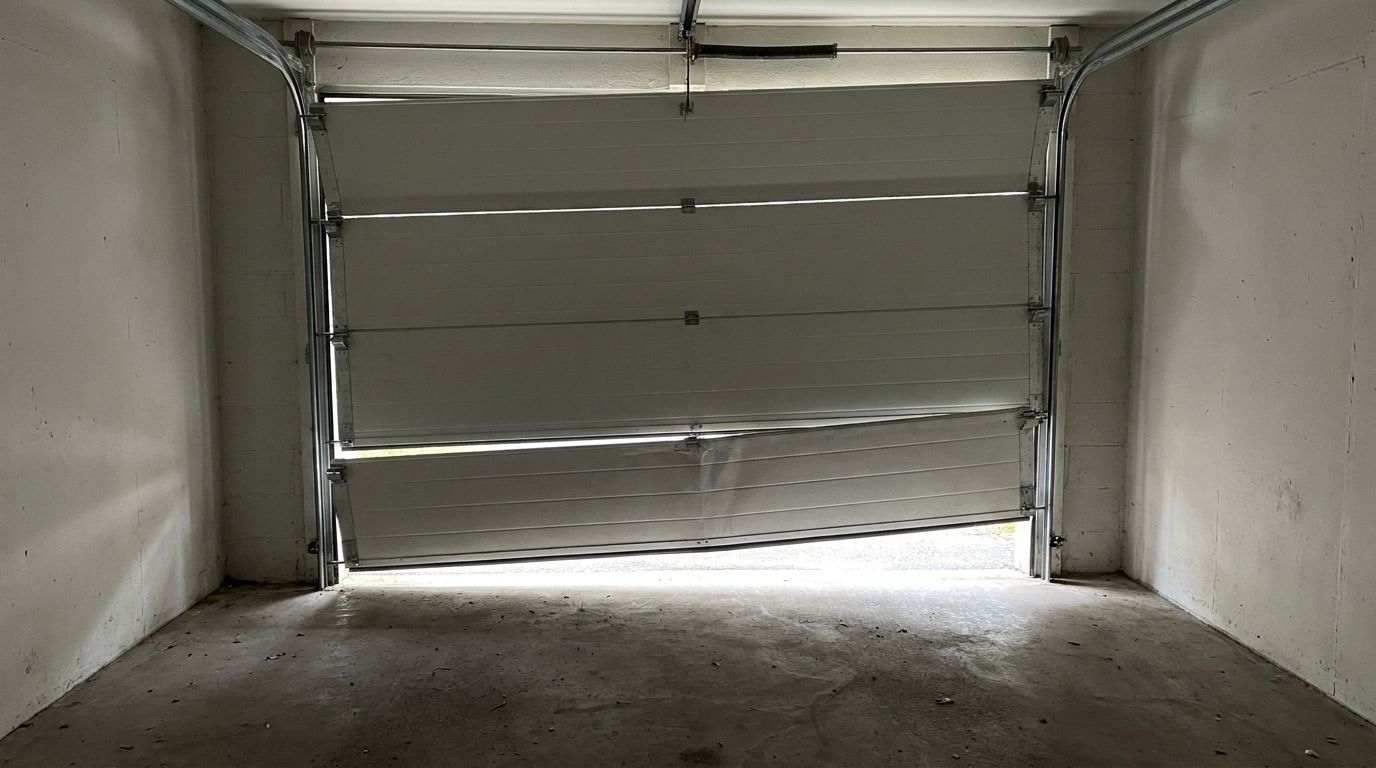
| Door opens crooked or one side lags | One of two springs broke, or cables have come off the drum |
| Loose or dangling cable | Often follows a spring failure. Do not operate the door. |
What the Spring Actually Does
This is worth understanding, because it explains why the failure is so abrupt.
The opener does not lift your garage door. It guides it. The actual lifting is done by the springs, which counterbalance the door's weight so that a 200-pound door behaves as though it weighs almost nothing. The opener motor is sized only for that small residual load.
There are two systems in common use:
- Torsion springs mount on a steel shaft above the door opening. They wind and unwind as the door moves. This is the modern standard, and if your door was installed in recent years, a torsion spring is probably what you will find above the opening.
- Extension springs run along the horizontal tracks on either side, stretching as the door closes. Older installations often use these. They should always have a containment cable running through them, because without one a broken extension spring can travel across the garage at speed.
Springs are rated in cycles. One cycle is one full open and close. A standard spring is commonly rated for around 10,000 cycles. A household that opens the door four times a day reaches that in roughly seven years. High-cycle springs rated for 20,000 or more are available and are worth considering if your garage is the main entrance to the house.
Why This Is Not a DIY Repair
Garage door spring replacement is genuinely among the most hazardous common home repairs, and this is not a case of a contractor talking you out of saving money.
A torsion spring under tension stores a substantial amount of energy. Releasing it requires winding bars inserted into the winding cone, held correctly, and turned in controlled increments. If a bar slips, or if the wrong tool is used, that energy releases at once, in an enclosed space, at head height. Injuries from this include broken bones, lost fingers, and worse.
Beyond the immediate danger, several things routinely go wrong on DIY spring jobs:
- Wrong spring specification. Springs must be matched to the door's exact weight, height, and drum size. A mismatched spring leaves the door unbalanced, which destroys the opener within months.
- Replacing only one spring. On a two-spring door, if one broke the other is the same age and near the end of its life. Replacing one means paying for the service call twice.
- Improper cable seating. Cables that come off the drum during the repair cause the door to bind or come off track.
- Incorrect final tension. An improperly balanced door is unsafe even when it appears to work, and it shortens the life of every other component.
The tools alone often cost more than the difference between doing it yourself and hiring someone who does it every day.
What to Do Right Now
If you suspect a broken spring, follow these steps in order.
- Stop using the door. Do not keep pressing the opener button. Forcing an unbalanced door strains the motor and can pull the door off its tracks.
- Do not disconnect the opener and lift by hand. Without spring counterbalance you are lifting the full weight of the door, and it will come down hard if you lose your grip.
- Keep children and pets out of the garage. A door with a broken spring or a loose cable can drop without warning.
- If your car is inside, leave it. Getting the vehicle out is not worth propping the door with anything improvised. A trained technician can release it safely, usually the same day.
- Look, but do not touch. From a safe distance, check whether the coil above the door has a visible gap. That confirms a torsion spring failure and is useful information when you call.
- Call for service. Note whether you have one spring or two, and whether the door is currently open or closed.
What the Repair Involves
A professional spring replacement follows a consistent process:
- Securing the door in place so it cannot move during the work
- Safely releasing any remaining tension in the intact spring
- Removing both old springs, along with cables if they are worn
- Installing new springs matched to the door's measured weight and dimensions
- Winding to the correct tension and checking balance at multiple positions
- Testing the auto-reverse safety feature and the photo-eye sensors
- Lubricating rollers, hinges, and bearings while the technician is there
Time on site depends on the door and on whether cables, rollers or bearings need replacing as well. The balance test at the end matters: a correctly balanced door, disconnected from the opener, should stay put when raised halfway rather than drifting up or falling.
Always replace both springs. On a two-spring door, they were installed together and have gone through the same number of cycles. When one fails the other is close behind. Replacing both costs modestly more now and saves an entire second service visit in a few months.
What Else Usually Needs Attention
A spring rarely fails in isolation, because everything else on the door has done the same number of cycles. A good technician will look at four things while the door is apart.
Cables. The lift cables run from the bottom bracket to the drums and take the full load every cycle. They fray from the inside out, so a cable that looks acceptable can still be close to failing. If they are showing broken strands or kinks, they get replaced with the springs.
Rollers. Worn rollers make the door noisy and drag on the tracks, which puts extra load on the springs and the opener. They are inexpensive and they are already accessible during a spring job.
Bearings and the center bracket. The shaft turns in bearings that eventually dry out and seize. A seizing bearing is often the grinding noise people report in the weeks before a spring lets go.
The opener itself. If the door has been running unbalanced for a while, the opener has been lifting weight it was never designed to lift. Sometimes the spring failure is the second problem rather than the first. If yours is showing its age, our guide to garage door costs in the Shenandoah Valley covers what replacement involves.
How to Get More Life From the Next Set
Springs are wear parts and they will eventually fail again. A few things extend their life:
- Lubricate twice a year. A light coat of garage door lubricant on the springs, rollers, hinges, and bearings reduces friction and rust. Do not use WD-40 as a lubricant here; it is a solvent and strips existing grease.
- Ask about high-cycle springs. If your garage is the family's main entrance and the door cycles six or eight times a day, a 20,000-cycle spring may make sense.
- Test the balance annually. Pull the release handle with the door closed, then lift manually to about waist height. It should hold position. If it drifts or drops, the springs are losing tension.
- Watch for rust. Humidity corrodes springs over time, and a rusted coil fails sooner. Galvanized springs resist this better.
- Do not ignore new noises. Grinding, popping, or a door that hesitates on the way up often precedes a failure by weeks.
Our garage door maintenance checklist covers the rest of the annual routine, and the signs a door needs repair covers what else to watch for.
Why Shenandoah Valley Homeowners Call Regal Garage Doors
Regal Garage Doors serves Harrisonburg, Waynesboro, Staunton, Augusta County, Crozet, Charlottesville, and the surrounding Shenandoah Valley from locations in both Harrisonburg and Waynesboro. Regal Garage Doors is a division of Stoneburner Inc.
- Same-day service available for broken springs and other urgent repairs
- Class A Contractor License #2701037133
- Clopay doors and LiftMaster openers when replacement is the better option
- Financing options available for larger repairs and replacements
Same-Day Garage Door Spring Repair Across the Valley
A broken spring leaves you without a working garage door, often with a vehicle stuck inside. It is a repair worth handling quickly and worth handling correctly.
Regal provides same-day spring repair service for homeowners across Harrisonburg, Waynesboro, Staunton, Augusta County, and the surrounding Shenandoah Valley. A broken spring is a repair for a professional, not a weekend project, and it is worth having done properly the first time.
Call Regal Garage Doors at 540-208-1007 and let us know whether your door is stuck open or closed. We will get a technician out to you.
Frequently Asked Questions
How do I know if my garage door spring is broken?
The clearest sign is a visible gap in the coiled spring above the door. Other indicators include a loud bang from the garage, a door that will not open or only rises a few inches, and a door that feels extremely heavy when lifted by hand.
Can I still use my garage door with a broken spring?
No. Operating the door strains the opener motor, can pull the door off its tracks, and risks the door dropping. Stop using it, keep people and pets out of the garage, and call for service.
How long does garage door spring replacement take?
It depends on the door, the springs it needs, and whether worn cables or rollers are replaced at the same time. The work includes winding the new springs to correct tension, rebalancing the door, and testing the safety features. Regal offers same-day service across the Shenandoah Valley for this repair.
Should I replace both garage door springs or just the broken one?
Both. On a two-spring door, the springs were installed at the same time and have gone through the same number of cycles. When one breaks the other is near the end of its life, so replacing only one usually means a second service call within months.
How long do garage door springs last?
Standard springs are rated for around 10,000 cycles, which works out to roughly seven years for a household opening the door four times a day. High-cycle springs rated for 20,000 or more are available if your garage is the main entrance to the house.
Why is garage door spring replacement dangerous?
Torsion springs store a large amount of energy under tension. Releasing that energy requires specific winding bars and technique. If a tool slips, the stored force releases instantly at head height, which is how these repairs cause serious injuries.
What causes garage door springs to break?
Normal cycle wear is the most common cause. Rust from humidity accelerates it, as does poor lubrication and cold weather, which makes metal more brittle. That is why so many springs fail on the first hard freeze of the season.