
Broken Spring Repair: How to Safely Replace Your Garage Door Springs
When a Garage Door Spring Breaks, Here's What You Need to Know
Broken spring repair is one of the most common — and most dangerous — garage door fixes a homeowner can face.
Before we get into the details, here's a quick overview of what's involved:
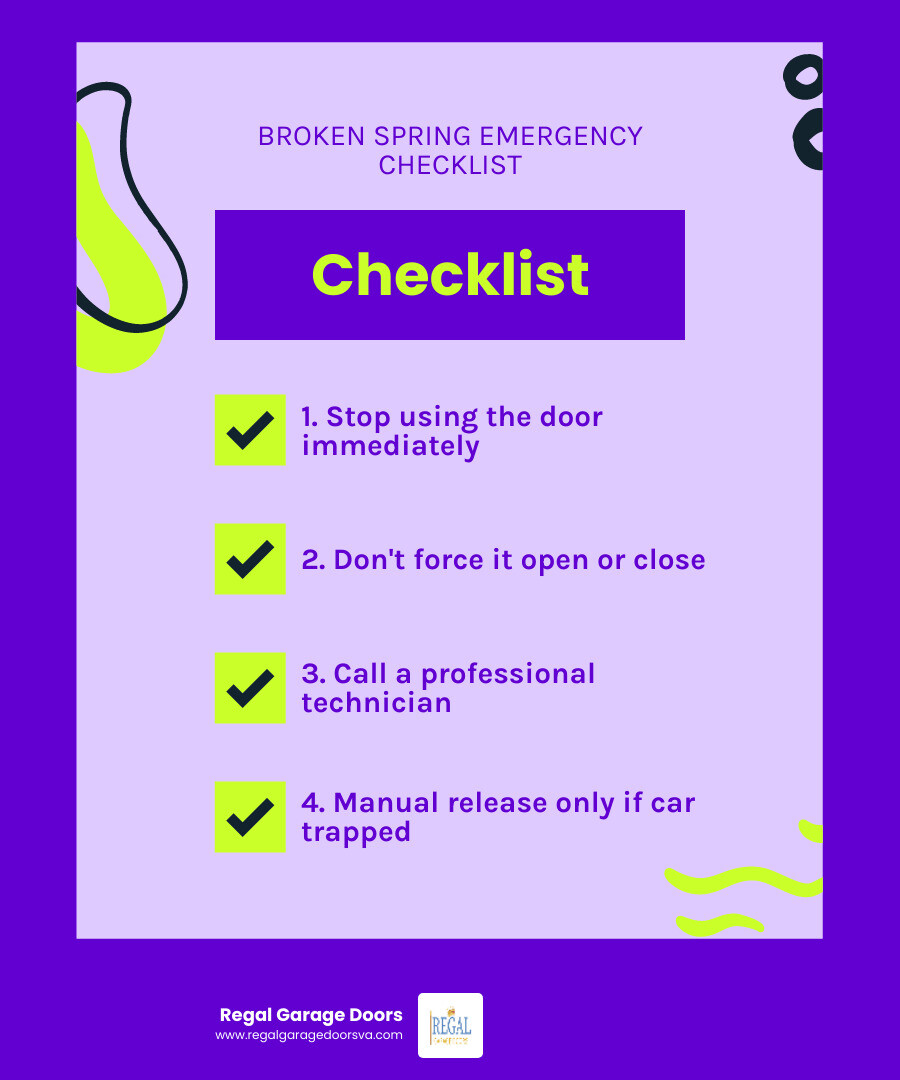
- Stop using the door immediately — a broken spring makes the door unsafe to operate
- Do not attempt to open or close it — garage doors weigh 200–300 lbs. and can fall without warning
- Call a licensed garage door technician — spring replacement requires specialized tools and training
- If your car is trapped, manually release the door with help from another person (more on this below)
- Expect a repair cost of $270–$350 for most residential setups in the GTA and surrounding areas
A broken garage door spring rarely gives much warning. One moment your door is working fine — then you hear a loud bang , and suddenly the door won't budge. That sound is the spring snapping under tension, releasing stored energy all at once.
It's more than just an inconvenience. Garage door springs are under extreme tension at all times. When they fail, the door loses the counterbalance that makes it light enough to lift. Without that, a 200–300 lb. door becomes a serious safety hazard.
This guide walks you through how springs work, how to spot the signs of failure, what a proper repair looks like, and — critically — when to step back and call a professional.
Understanding Garage Door Springs: Torsion vs. Extension
To understand why broken spring repair is so critical, we first need to look at the two main types of springs used in residential and commercial garage doors. These springs act as the "muscles" of your door, doing the heavy lifting so your opener (or your back) doesn't have to.
Torsion Springs
Torsion springs are the most common type found in modern homes throughout Harrisonburg and Staunton. They are mounted on a metal shaft (the torsion tube) directly above the door opening. These springs work by twisting; as the door closes, cables attached to the bottom corners pull on drums, which winds the spring and stores energy. When you open the door, that energy is released to help lift the weight.
Extension Springs
Extension springs are typically found on older or smaller residential doors. They are mounted above the horizontal tracks on both sides of the door. Unlike torsion springs that twist, these springs stretch (extend) to store energy. Because they can fly off like a projectile if they snap, they should always have a safety cable running through the center.
| Feature | Torsion Springs | Extension Springs |
|---|---|---|
| Location | Above the door header | Above the side tracks |
| Mechanism | Twisting (Torque) | Stretching (Tension) |
| Safety | Generally safer (contained on a shaft) | Higher risk (can fly if no safety cable) |
| Durability | 10,000 - 20,000 cycles | 5,000 - 10,000 cycles |
| Balance | Provides smoother, more balanced lift | Can cause "jerking" if uneven |
Whether you have a standard home setup or a heavy-duty warehouse door, the physics remains the same: the spring must match the door's weight perfectly. If you are interested in upgrading your system, you can learn more about our residential services to see which spring type fits your needs.
Identifying the Need for Broken Spring Repair
How do you know if your spring has actually failed? Sometimes it’s obvious, and other times it’s a mystery why the door won’t move.
1. The "Loud Bang"
The most common sign is a sound like a gunshot or a heavy object falling in the garage. This is the sound of the steel coil snapping under hundreds of pounds of pressure. If you heard this while you were inside the house, check the garage immediately.
2. The Visible Gap
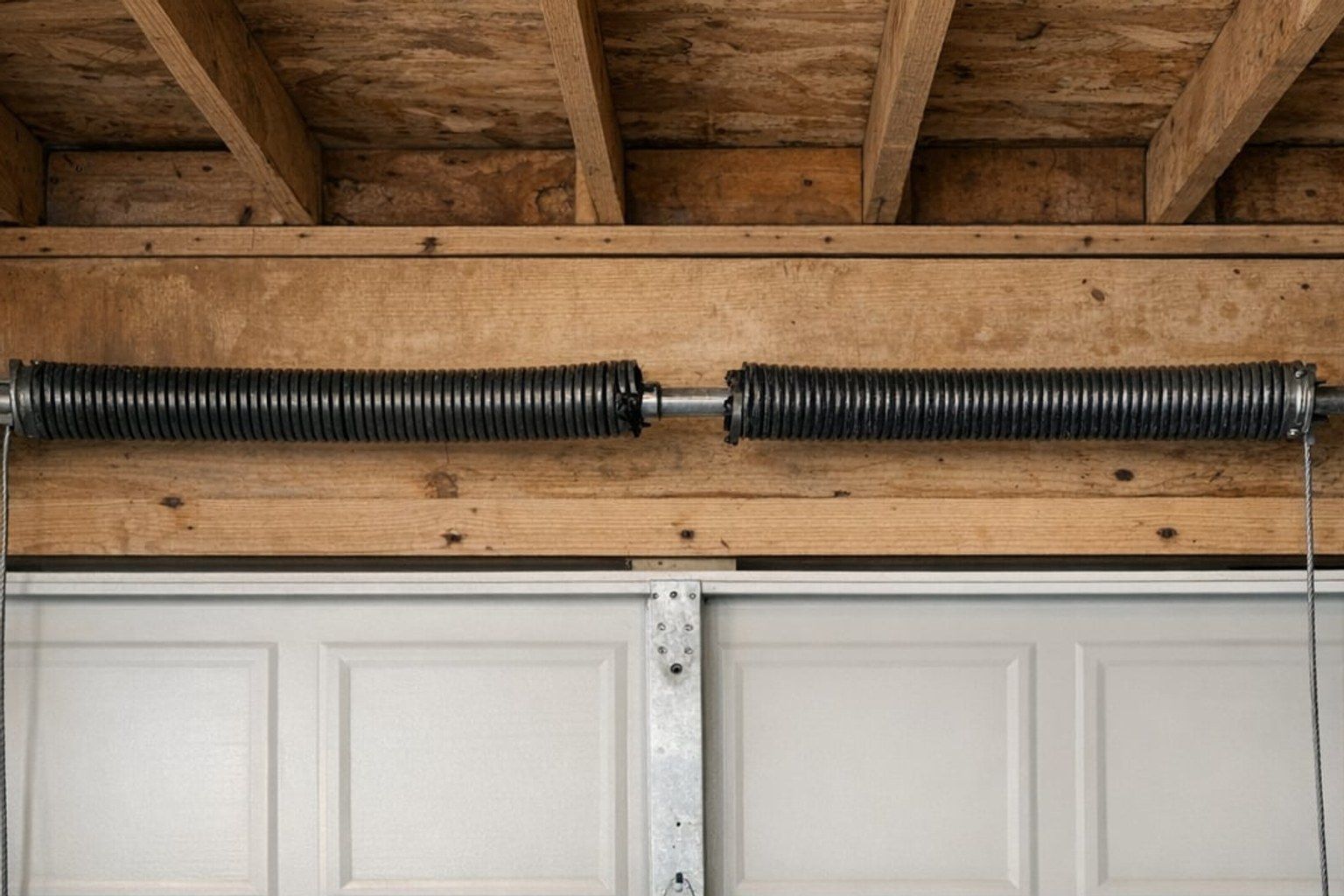
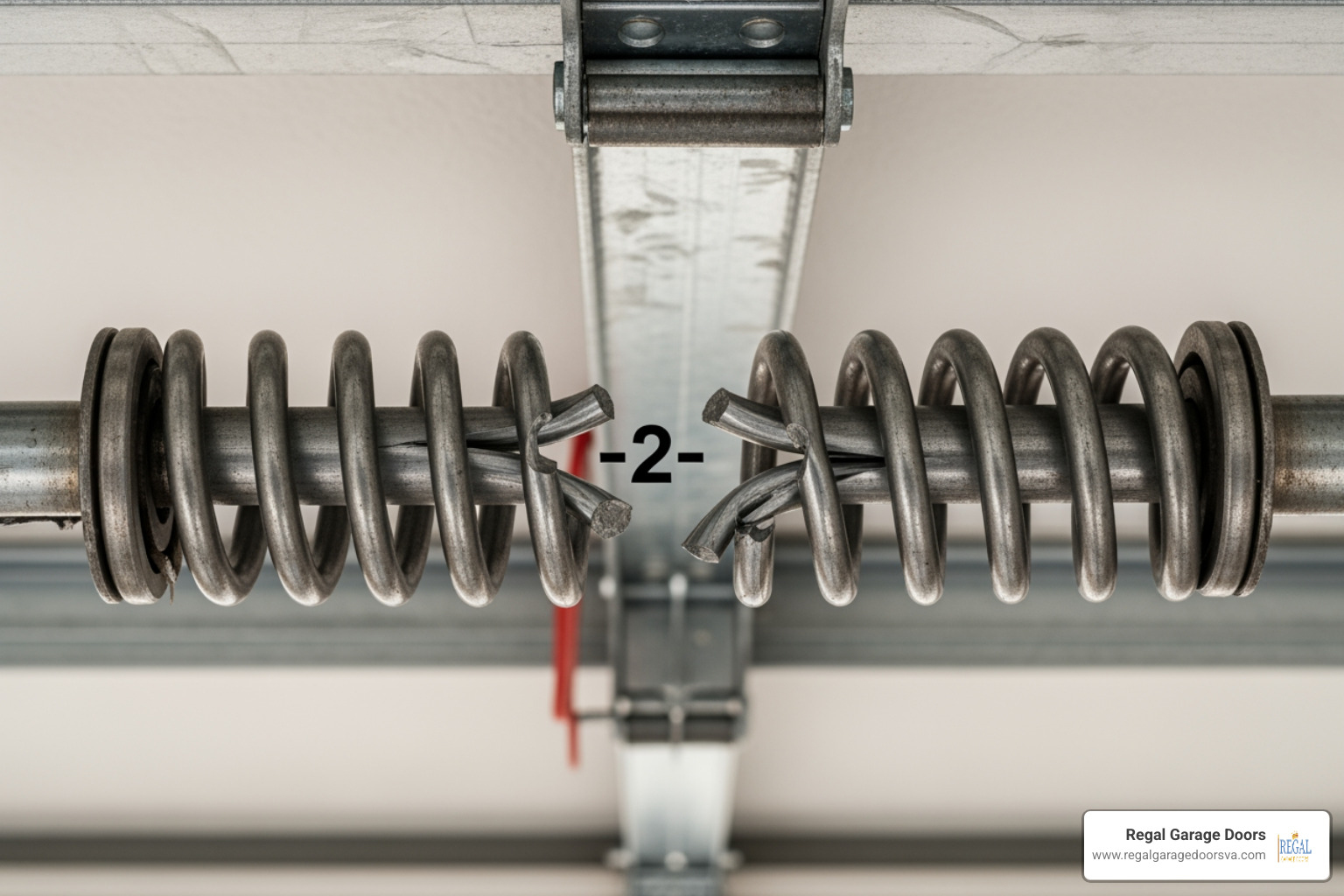
If you look at the spring above your door and see a 2-inch gap between the coils, the spring is broken. Torsion springs usually snap in the middle, leaving two separate pieces on the shaft.
3. The Door Feels Like Lead
A standard garage door weighs between 200 and 300 lbs. If the spring is broken, your opener will likely strain and then stop, or the door will only lift an inch or two before falling back down. Do not try to force the opener to lift it, as this can burn out the motor.
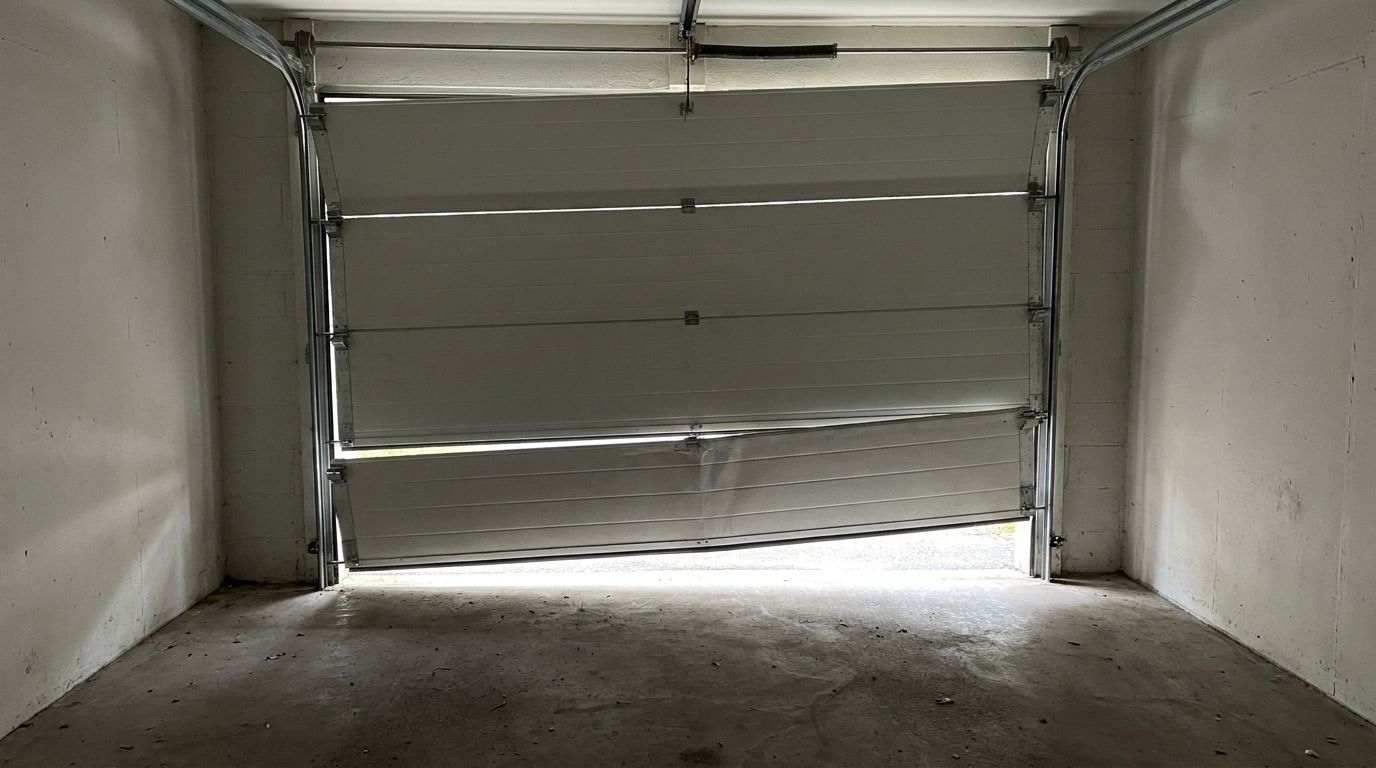
4. Crooked Door or Frayed Cables
If one spring breaks in a two-spring system, the door may lift unevenly, appearing crooked in the tracks. You might also notice cables hanging loose or looking frayed. For more details on what to look for, check out our guide on 6 Obvious Signs Your Garage Door Needs Repair in Staunton VA.
Emergency Steps for Broken Spring Repair
If your car is trapped inside when the spring breaks, you are in a "garage door emergency."
- Do not pull the red emergency release cord while the door is open. Without the spring's tension, the door will crash down instantly.
- Get help. If you must get the car out, you will need at least two or three strong people to manually lift the door.
- Secure the door. Once lifted, use locking pliers (Vise-Grips) clamped onto the tracks directly under the rollers to prevent the door from falling while you move the vehicle.
- Call for help. Contact a professional immediately. For those attempting to understand the risks, the Family Handyman guide provides excellent safety context on why these components are so volatile.
The Step-by-Step Process for Spring Replacement
While we strongly advise against DIY broken spring repair, understanding the professional process helps you appreciate the precision required. A technician doesn't just "swap a part"; they perform a calculated mechanical calibration.
1. Measuring and Sizing
Springs are not one-size-fits-all. A technician must determine:
- Wire Diameter: Measured by counting 20 or 40 coils and converting to a decimal.
- Inside Diameter: Usually 2 inches for residential doors.
- Length: The length of the spring when it is relaxed (not wound).
- Wind (Handing): Springs are "Left-Hand" or "Right-Hand" wound. Installing them on the wrong side will cause the door to fail.
2. Winding the Tension
This is the most dangerous part of the job. Using specialized winding bars, the technician inserts them into the winding cone and turns the spring. For a standard 7-foot door, this usually requires 30 to 31 quarter-turns (7.5 full turns). If a winding bar slips during this process, it can cause severe injury or even death. You can find a detailed guide on torsion spring mechanics to see the math behind this tension.
3. Balancing and Testing
Once wound, the technician "stretches" the spring slightly (about 1/4 inch) before tightening the set screws to prevent the coils from binding. They then test the door's balance. A perfectly balanced door should stay in place when left halfway open and should feel light enough to lift with one hand.
Professional Tools for Broken Spring Repair
You won't find the necessary tools in a standard home toolbox. Professionals use:
- Hardened Steel Winding Bars: Never use screwdrivers or pliers; they will fail under the pressure.
- Locking Pliers: To keep the torsion tube from spinning during the install.
- Socket Wrench: For securing the stationary and winding cones.
- Personal Protective Equipment (PPE): Leather gloves and safety goggles are non-negotiable.
For businesses in Waynesboro or Harrisonburg, we also offer specialized commercial services for heavy-duty industrial springs that require even more specialized equipment.
Why Professional Service is the Safest Choice
We get it — everyone wants to save a few dollars. But broken spring repair is one area where the "DIY tax" can be incredibly high.
The Risk Factor
A garage door spring is essentially a giant, tightly wound battery of energy. If that energy is released uncontrollably, it can shatter bones or cause deep lacerations. Professionals are trained to stay out of the "path of fire" (the area where a bar or spring would fly if it broke).
Replacing Both Springs
If your door has two springs and only one is broken, we will always recommend replacing both. Why? Because they were installed at the same time and have been through the same number of cycles. If one snapped at 10,000 cycles, the other is likely at 9,999. Replacing both at once saves you a second service fee and a second "stuck car" morning next month.
Better Parts and Warranties
When you hire us, you aren't getting a generic spring from a big-box store. We use high-quality steel springs, and we often offer "double-life" springs rated for 25,000 cycles (lasting 15–20 years). Plus, professional service comes with a warranty on both the parts and the labor, giving you peace of mind that a DIY job simply can't provide. If you're curious about the value of professional work, you can see how much garage door installation costs in Staunton VA to compare the investment.
Frequently Asked Questions about Broken Spring Repair
How long do garage door springs typically last?
Most standard springs are rated for 10,000 cycles. A "cycle" is one full opening and closing of the door. If you use your garage door 4 times a day, that’s about 1,460 cycles a year, meaning your springs should last roughly 7 years. Factors like rust, extreme temperature fluctuations in the Shenandoah Valley, and lack of lubrication can shorten this lifespan.
How much does garage door spring replacement cost?
In our service areas like Waynesboro and Harrisonburg, a typical residential spring replacement costs between $270 and $350. This usually includes the service fee ($150) and the cost of the springs themselves ($120–$180). Emergency or weekend service may be higher, often reaching $400. For a more detailed breakdown of service expenses, check our transparent pricing for garage repairs.
Can I perform a broken spring repair myself?
Technically, yes — if you have the specialized tools and the physical strength to manage the tension. However, we strongly recommend against it. Most home centers don't even sell the correct springs, and using improvised tools like screwdrivers is a recipe for a trip to the emergency room. Professional calibration ensures your door opener doesn't burn out prematurely, saving you even more money in the long run.
Conclusion
A broken garage door spring is a major disruption, but it doesn't have to be a disaster. By recognizing the signs early — like that telltale loud bang or a door that suddenly feels heavy — you can take action before someone gets hurt or your car gets stuck.
At Regal Garage Doors, we pride ourselves on being the local experts for Harrisonburg, Waynesboro, and Staunton. We provide code-compliant, safe, and efficient broken spring repair so you can get back to your routine without the stress. From standard residential fixes to complex commercial overhead solutions, we’ve got the Valley covered.
Don't risk a DIY injury. Schedule your professional residential services today and let us handle the heavy lifting!